Copyright

Copying Technical Standards Referenced in Laws Held to Be Fair Use by D.C. Court of Appeals

2024-02-27T18:19:54-05:00September 25th, 2023|Copyright, Intellectual Property|

In American Society for Testing and Materials (ASTM) v. Public.Resource.Org, Inc., the D.C. Court of Appeals held on Sept. 12, 2023 that "Public Resource’s copying of material [217 industry standards] incorporated by reference into law, for free dissemination to the public, was fair use." This is likely not the last word on this subject*: the case began in 2013, was appealed, then stayed pending the Supreme Court's decision in the 2020 case of Georgia v. Public.Resource.Org (which held that annotated versions of state laws were not restricted by copyright). (h/t Fred Wilf) "Public  Resource  posts standards  that  government  agencies have incorporated into law [...Read More...]
Not So Happy Together – The Turtles vs. SiriusXM Copyright Case

2022-05-13T14:11:49-04:00August 31st, 2021|Contracts, Copyright, Intellectual Property|

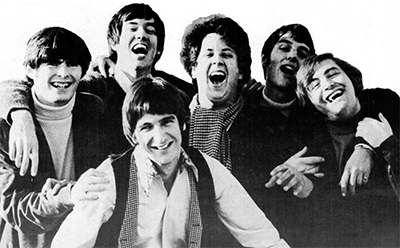
What happens when Congress is unable - for almost 50 years - to figure out how to protect recorded music? Specifically, music recorded before 1972? Messy litigation involving the Turtles is what happens. First, some background. Almost 50 years ago, Congress passed the Sound Recording Amendment to the 1909 Copyright Act, which provided copyright protection to sound recordings created on or after February 15, 1972. However, there was no Federal law requiring that royalties be paid for works created before that date until Congress unanimously passed the Music Modernization Act in 2018. This law included a provision that required digital [...Read More...]

What Is Section 230 of the Communications Decency Act?

2021-05-28T14:23:28-04:00May 28th, 2021|Copyright, Intellectual Property|

Over the past few years, you may have heard various people express support for or opposition to Section 230 of the Communications Decency Act. While President Trump and others have accused Internet content publishers of using it to discriminate against conservative points of view, the reality is quite different and actually not political at all. While people will often disagree about specific examples of political speech online, the irony is that political speech would have a hard time existing on the Internet without Section 230. Some quick history: Prior to the World Wide Web, Internet content was only easily accessible [...Read More...]

Where Have All the Soundtracks Gone?

2021-05-02T14:41:05-04:00April 30th, 2021|Contracts, Copyright, Intellectual Property, Licensing|

When fans of the TV show “Dawson’s Creek” watch it on Netflix, it will sound very different. This is because the theme song (Paula Cole’s "I Don't Want to Wait") has been replaced by Jann Arden’s "Run Like Mad" due to lack of streaming and DVD rights to the Paula Cole song. Dawson’s Creek has plenty of company in this area. Before the rise of streaming services, TV shows could save money by paying for a limited-time license for music rights, to cover the expected life of the show. The cost would be a fraction of the cost of perpetual [...Read More...]

You Can’t Copyright That?

2021-08-31T17:59:48-04:00March 31st, 2021|Copyright, Intellectual Property, Trademark|

Copyright law often isn't as well understood as, for example, criminal defense, or family law. Most people may know that if you write a book, perform a song, or take a photograph, you can obtain copyright protection for those works. But what about items that you can't protect through copyright?  Here are some examples of items that aren't eligible for copyright protection: Ideas.  To be eligible for copyright protection, works must be "fixed in a tangible medium of expression." This can be on paper, on a computer drive, etc. Ideas and concepts don't qualify. This can include business practices, [...Read More...]

New Copyright Laws: Tougher Enforcement and New “Small Claims Court”

2024-02-14T19:20:25-05:00December 30th, 2020|Copyright, Intellectual Property|

At the end of December 2020, Congress passed an "omnibus" bill which justifiably received significant attention for funding the military and providing financial relief during the coronavirus pandemic. Included in the legislation were new laws relating to copyright: the Copyright Alternative in Small-Claims Enforcement (CASE) Act and the Protecting Lawful Streaming (CASE) Act. The CASE Act The CASE Act is a new mechanism for handling copyright claims. The new law creates a Copyright Claims Board within the United States Copyright Office, which can hear cases involving total damages of up to $30,000. The purported benefit is that parties save money [...Read More...]

Spirit v. Led Zeppelin Case Finally Ascends the Stairway to Heaven

2021-08-24T10:27:33-04:00October 30th, 2020|Copyright, Intellectual Property|

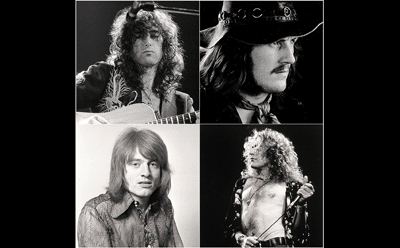
After six years of litigation, Led Zeppelin has finally won.  Michael Skidmore, the trustee for the estate of Spirit's guitarist Randy Wolfe, sued in 2014, claiming that Led Zeppelin's "Stairway to Heaven" infringed Spirit's copyright in its song, "Taurus."  On October 5, 2020, the Supreme Court denied Skidmore's request for a writ of certiorari after the 9th Circuit Court of Appeals ruled against him in March 2020, which now ends the litigation. In 2016, a jury ruled that "Stairway to Heaven" did not infringe "Taurus", and Skidmore appealed.  A 9th Circuit panel disagreed, and remanded the case for a new [...Read More...]

Cease and Desist Letters – What Would Bill Murray Do?

2020-09-30T10:49:03-04:00September 29th, 2020|Contracts, Copyright, Intellectual Property, Patent, Trade Secrets, Trademark|

In the world of intellectual property, the "Cease and Desist" letter is king. These are letters from attorneys for the owner of a work or invention, sent to an alleged infringer of the owner's intellectual property rights. The letters cite the legal basis for their claim, may threaten doom, destruction, and huge financial damages, and are often quite stern. Overly aggressive cease and desist letters can backfire. The Lumen Database website (originally chillingeffects.org) began as a project to track overzealous use of the Digital Millennium Copyright Act's enforcement mechanisms, spotlighting the most egregious examples of cease and desist letters. Such [...Read More...]

Star Trek Copyright – Where No Court Has Gone Before

2020-09-30T09:57:45-04:00August 31st, 2020|Copyright, Intellectual Property|

Two thousand years ago, the Roman historian Tacticus said that "victory is claimed by all, failure to one alone." Such is the fate of successful creative works, whether they are music, art, or television shows. In recent years, the Star Trek universe has expanded to include several new shows, including the successful "Star Trek: Discovery." Enter the copyright infringement lawsuits. Anas Abdin created a videogame over the course of several years between 2014 and 2017. The video game is set in 20,000 B.C., and focuses on characters living on a space station. In 2015, he created a character based upon [...Read More...]

Copyright Law Doesn’t “Heart” New York

2021-08-24T10:31:12-04:00May 29th, 2020|Copyright, Intellectual Property, Trademark|

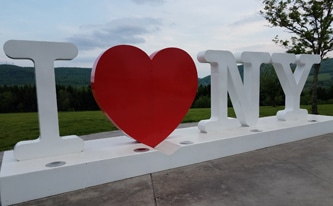
Why is the famous "I [heart] New York" logo protected by trademark and not copyright? At first glance, you'd think that it's artwork, and therefore can be protected by copyright. However, the Copyright Act protects "original works of authorship." The "I [heart] New York" logo is simply the phrase "I love New York", with the word "love" replaced by a red heart. As the Supreme Court held in Feist Publications, Inc. v. Rural Telephone Service Co., [t]he sine qua non of copyright is originality. To qualify for copyright protection, a work must be original to the author. … Original, as [...Read More...]

Go to Top